Download Brochure
9 min read
2026-01-11


Share
The pandemic didn’t just disrupt daily life—it fundamentally reshaped how people perceive the idea of “home.” What was once viewed as a basic residential unit rapidly evolved into a multifunctional space, capable of supporting work, education, recreation, and emotional wellbeing.
This sudden shift exposed the limitations of dense urban housing, particularly in cities like Delhi and Gurugram, where vertical living offered limited flexibility during prolonged periods of confinement. As a result, there has been a visible and sustained migration toward low-density, plotted, and master-planned communities in emerging corridors such as Panipat.
What initially appeared to be a temporary behavioural reaction has now evolved into a long-term structural shift in housing preferences.
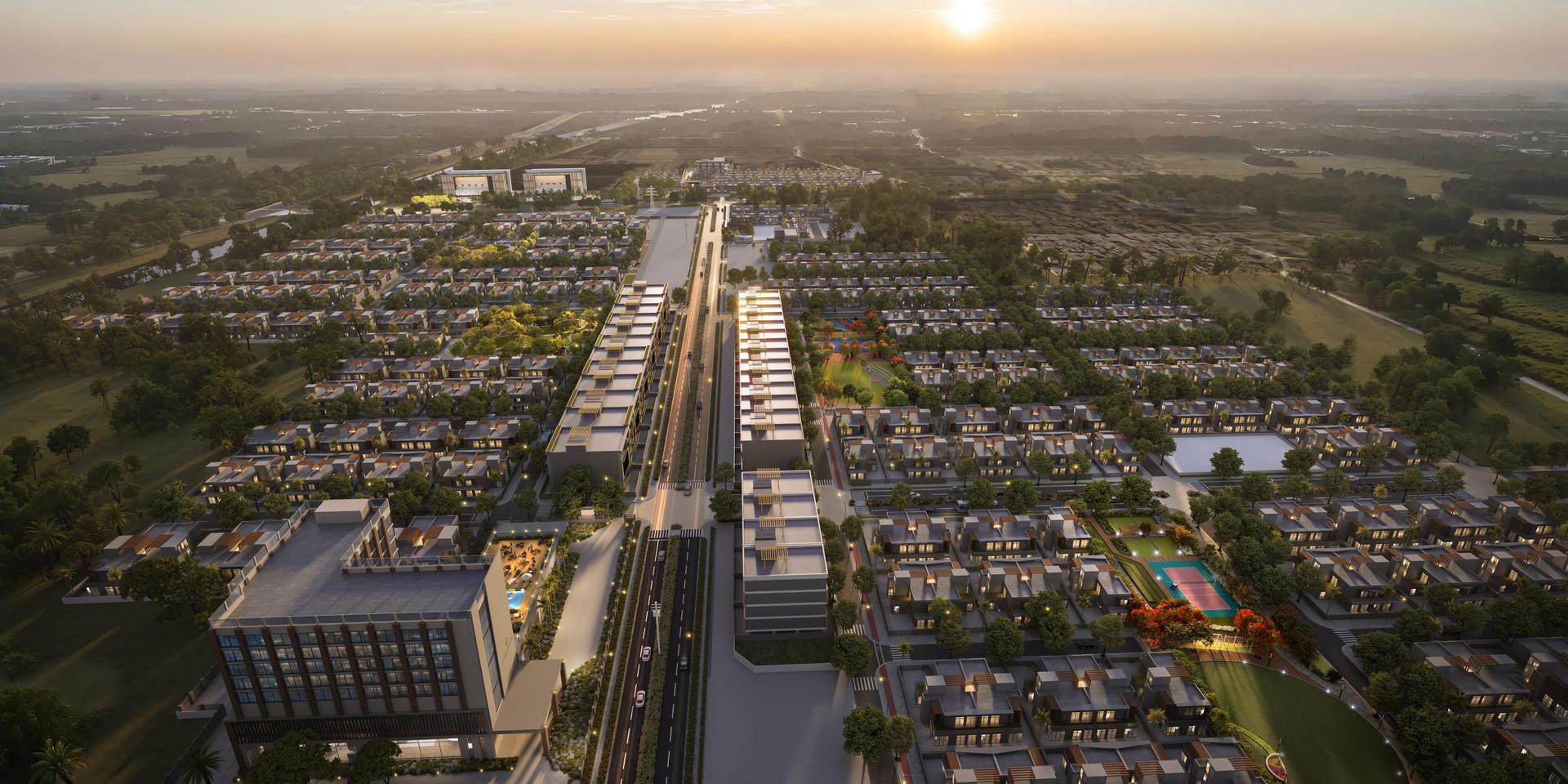
Low-density development refers to residential planning with significantly fewer units per acre compared to conventional urban housing. It typically includes larger plot sizes, horizontal housing formats such as villas or independent floors, and wider internal road networks.
A defining feature of these developments is the prioritisation of open, unbuilt green spaces. Unlike high-rise clusters that maximise vertical density, low-density communities are designed to spread horizontally, enabling a more breathable and spacious environment.
This approach also allows greater architectural independence, particularly in plotted developments where homeowners can design customised residences over time.
One of the most significant long-term outcomes of the pandemic has been the elevation of health and wellness as core real estate priorities. Buyers are now actively seeking homes that support better air quality, natural light, and direct access to nature.
Research from global health organisations such as the WHO highlights the positive correlation between green environments and reduced stress levels, improved mental health, and overall wellbeing.
Low-density developments naturally align with these requirements by ensuring better ventilation, reduced congestion, and the inclusion of private outdoor spaces such as gardens and terraces.
In NCR, where air quality and congestion remain ongoing challenges, these environmental advantages have become especially significant.
Extended periods of lockdown highlighted the limitations of shared infrastructure in high-density housing. Common elevators, crowded lobbies, and shared amenities became sources of discomfort and concern.
Low-density housing offers a fundamentally different experience. Independent entrances, private parking, and low interaction with shared indoor spaces create a stronger sense of autonomy and safety.
Private outdoor areas further enhance this separation, allowing residents to enjoy open-air living without external interference. This architectural independence has become a key driver of demand.
The widespread adoption of remote and hybrid work models has significantly influenced housing preferences. Earlier, proximity to workplaces dictated residential location choices.
Today, with professionals working remotely for a large part of the week, spatial quality has become more important than geographic proximity.
Homebuyers now prioritise larger layouts, dedicated workspaces, and quieter environments—features that are more naturally available in low-density communities than in compact urban apartments.
This shift has expanded the acceptable commuting radius and increased demand for suburban and peripheral developments.
The strength of low-density developments lies not just in individual homes but in the design of the overall environment. These communities prioritise parks, walking trails, and landscaped public areas as essential components of daily life.
Such planning fosters healthier social interaction by encouraging outdoor engagement in uncrowded, accessible spaces.
Unlike dense urban clusters, where shared spaces are often limited or congested, low-density layouts support organic community building through open-air experiences.
From an investment standpoint, low-density developments—especially plotted communities—offer strong long-term value. They are anchored in land ownership, which is inherently finite and historically appreciating.
Industry insights suggest that lifestyle-driven housing formats with larger land parcels tend to demonstrate stronger resilience during market fluctuations.
The combination of exclusivity, space, and controlled density enhances both demand and long-term capital appreciation potential.
Despite their advantages, low-density developments come with practical considerations. The most notable is location—these projects are often situated farther from established city centres due to land availability requirements.
This can result in longer commute times for residents who continue to work in central business districts.
However, improving highway infrastructure, expressway connectivity, and the rise of hybrid work models are gradually reducing the impact of these trade-offs.
Across NCR, residential growth is steadily expanding toward peripheral corridors such as Sonipat and Panipat. This reflects a broader global trend toward decentralised urban development.
The focus is shifting from centralised density to distributed, self-sustaining communities that prioritise livability, space, and environmental quality.
This evolution signals the rise of a polycentric urban structure, where multiple residential hubs function independently while remaining connected to larger metropolitan economies.
The pandemic accelerated an already emerging preference for spacious, wellness-oriented living environments. Today’s buyers increasingly prioritise quality of life alongside traditional real estate metrics.
Low-density developments respond directly to these expectations by offering privacy, open space, and a healthier built environment.
As urban expansion continues and remote work becomes a permanent feature of modern life, low-density living is transitioning from an aspirational concept to a mainstream residential choice.
Blogs

A Township Inspired by the Seven Chakras: A Life in Balance
As cities expand and lifestyles accelerate, residential planning is being challenged to balance physical comfort, mental clarity, and social continuity within everyday living.

Trident Parktown: Where Nature, Nurture & Community Unite
A conscious departure from high-density urban living, Trident Parktown is shaped by a three-leaf philosophy that brings nature, nurture, and community together into a balanced way of life.

The Weight of a Promise: Trident Parktown is Now RERA Approved
In the world of real estate, a project begins long before the first brick is laid. It begins with a promise. For the discerning homebuyer, that promise is a complex tapestry woven from architectural vision, lifestyle aspirations, and—most importantly—trust.

PROJECTS
Site Office
Trident Parktown,
Village Nizampur & Azizullapur,
Sector 19A & 40, Panipat, Haryana 132104
Corporate Office
Trident Realty,
16th Floor, DLF Square, DLF Phase-II, Jacaranda Marg
Gurugram-122002, Haryana (India)
© TRIDENT PARKTOWN PVT LIMITED, 2026 All rights reserved
The Developer has availed a construction loan from IndusInd Bank Ltd. (‘IBL’), and has mortgaged project land admeasuring 59.77084 acres and any structures built thereon to such lender, where necessary No Objection Certificates (NOCs) shall be provided by IBL, as per requirement.
Carefully Crafted By

PROJECTS
MEDIA CENTER


Site Office
Trident Parktown, Village Nizampur & Azizullapur, Sector 19A & 40, Panipat, Haryana 132104

Corporate Office
Trident Realty, 16th Floor, DLF Square, DLF Phase-II, Jacaranda Marg Gurugram-122002, Haryana (India)
© TRIDENT PARKTOWN PVT LIMITED, 2026 All rights reserved
The Developer has availed a construction loan from IndusInd Bank Ltd. (‘IBL’), and has mortgaged project land admeasuring 59.77084 acres and any structures built thereon to such lender, where necessary No Objection Certificates (NOCs) shall be provided by IBL, as per requirement.
Carefully Crafted By


