Download Brochure
10 min read
2026-06-16


Share
A city changes when its economic identity begins to expand. For decades, the value of Panipat was measured almost entirely by its production output. It was recognised primarily as a powerhouse of industrial manufacturing, global textile trade, and heavy refining. It was a landscape shaped by factories, logistics centres, and busy trading hubs—a place built focused on enterprise and commercial gravity.
But cities eventually evolve beyond their original economic foundations. When industrial sectors create consistent wealth, they trigger a parallel transformation in local demographics, purchasing power, and lifestyle expectations.
Today, Panipat is increasingly emerging as both an industrial and residential destination. Supported by infrastructure upgrades, improved regional connectivity, and evolving lifestyle aspirations, the city is attracting greater interest from homebuyers seeking organised residential environments.
The foundation of any successful residential market is a strong, self-sustaining local economy. Unlike suburban developments that rely entirely on a neighbouring metropolis for employment, Panipat possesses an independent financial engine. The city's industrial clusters, commercial manufacturing sectors, and the sprawling Panipat Refinery complex have generated decades of steady economic growth, attracting an influx of corporate professionals, skilled engineers, and entrepreneurial families.

This sustained economic activity has supported the growth of a financially stronger and increasingly aspirational residential population. As local business owners, textile exporters, and manufacturing executives accumulate capital, their focus naturally shifts toward improving their family's daily lifestyle. Economic growth creates opportunity, while changing lifestyle expectations influence how cities evolve. The capital generated in Panipat's commercial zones is now being reinvested directly into premium local real estate.
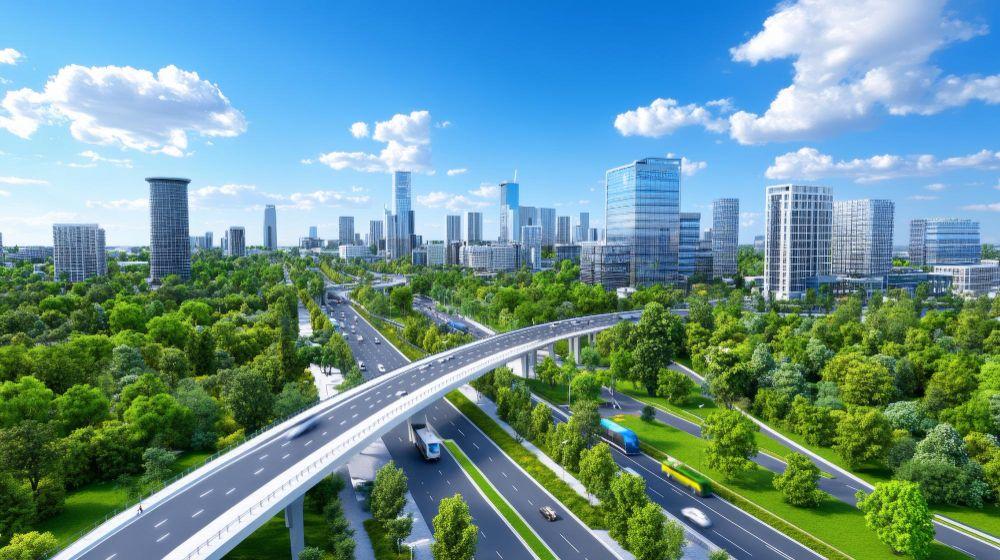
The physical catalyst for Panipat's residential transition is the modernisation of its primary transit corridors. Real estate expansion almost always follows major infrastructure upgrades before public perception fully catches up. The transformation of National Highway 44 (NH-44)—the vital Delhi-Chandigarh artery—into a high-speed, multi-lane corridor has completely changed the region's geography.

According to regional urban corridor studies by the Ministry of Housing and Urban Affairs (MoHUA), investments in highway widening, regional expressways, and high-speed transit networks naturally decentralise metropolitan populations. Proposed and planned regional connectivity improvements, including high-capacity transit initiatives, have the potential further to strengthen economic and residential linkages across the corridor. As transit friction decreases, long-distance travel becomes easy and predictable, allowing professionals and investors to establish premium residences outside the congested core of the capital without losing connectivity.
The growth of Panipat's housing market is closely linked to changing dynamics across the wider National Capital Region. For years, the real estate market focused heavily on traditional satellite hubs like Gurugram and Noida. However, continuous density pressures, rising land costs, and lifestyle fatigue in those overbuilt zones are driving the next phase of urban expansion outward along the northern corridor.
Reports from property consultancies like JLL India emphasise that residential demand is steadily moving toward Tier-2 corridors that balance open space with robust infrastructure. As residential demand explores emerging growth corridors, cities located along major transportation routes—including Panipat—are receiving increased attention from both homebuyers and investors.
The city has become an attractive option for buyers who find themselves priced out of premium low-density projects in Delhi or Gurugram, offering a practical alternative where buyers may find more space, lower density environments, and opportunities associated with emerging residential markets.
As Panipat integrates into the larger NCR ecosystem, the lifestyle expectations of local homebuyers are changing rapidly. Historically, the residential real estate market here was dominated by standalone plots, independent builds, and unmanaged local colonies. In that older model, housing choices were based primarily on plot size and basic geographical location, with little regard for the surrounding neighbourhood layout.
Modern homebuyers, however, evaluate real estate through a much wider lens. Upwardly mobile families, returning NRIs, and corporate professionals are moving away from fragmented, unzoned colonies.
Instead, they are looking for planned residential environments that provide managed infrastructure, comprehensive security, and open green spaces. This shift in buyer preferences marks a mature turn in the market, moving the conversation from basic land acquisition to a focus on everyday wellness and community lifestyle.
The main limitation of standalone residential layouts is their vulnerability to uncoordinated urban growth. When individual plots are built out without a central master plan, neighbourhoods often suffer from narrow internal streets, a lack of dedicated parks, inconsistent utility networks, and commercial activities spilling into private residential spaces.
Integrated townships address these issues by replacing urban chaos with planned organisation. According to World Bank guidelines on sustainable neighbourhood design, self-contained communities that integrate residential sectors with managed utilities, green open spaces, and dedicated commercial areas offer far greater long-term resilience and value retention.
Townships introduce order, clean zoning, and scalable infrastructure, providing an environment where residential life can thrive safely away from industrial and commercial disruptions.
This evolution toward structured living forms the foundation of modern master-planned developments like Trident Parktown in Panipat. Designed as a premium 125-acre integrated township situated on Nizampur Road with direct access from NH-44, the project serves as a clear benchmark for the city's residential transition.

The community is organised around a structured neighbourhood framework designed to balance residential zones, open spaces, and mobility networks. This layout logic protects home spaces from through-traffic while ensuring that nature is woven directly into the community fabric, featuring 10 themed parks and a 2.25-kilometre dedicated pedestrian and cycling loop.
Supported by premium community anchors like Club Emblem, the development combines custom homebuilding options with the security and professional maintenance of a managed estate, aligning with the growing preference for organised communities that combine residential comfort with everyday convenience.
For long-horizon property buyers and investors, Panipat's residential transition creates a unique market opportunity when a city moves from a purely commercial or industrial focus into an organised residential hub; early real estate investments tend to benefit from significant infrastructure-led appreciation.
Data from property consultancy Anarock Property Consultants indicates that master-planned developments within emerging growth corridors consistently outperform traditional standalone plots in capital appreciation over ten-year cycles.
However, as the market matures, not all projects grow equally; the quality of initial planning, road design, utility integration, and density controls becomes the ultimate determinant of long-term value. Investing in a properly structured township ensures your asset remains relevant, well-maintained, and highly desirable as the city continues to expand.
The ongoing transformation of Panipat demonstrates that a city's future is never permanently fixed by its past. The manufacturing sectors and textile trade loops that established Panipat's economy have successfully built a prosperous, future-focused city that is ready for a superior quality of life.
Panipat's future is likely to be shaped by a combination of economic strength, infrastructure development, and evolving residential aspirations. It is being written by the families choosing to build their futures in well-planned communities, by the modern infrastructure that connects the region, and by a shared focus on wellness, safety, and long-term residential value. The most enduring urban transformations often begin with infrastructure, gain momentum through investment and opportunity, and ultimately become visible in the quality of life they create for residents.
Ministry of Housing and Urban Affairs (MoHUA): National urban transit updates, highway development frameworks, and regional city development metrics. MoHUA Official Portal
JLL India: Market insights tracking Tier-2 city expansions, industrial corridor spillovers, and residential demand shifts. JLL India Insights
The World Bank: Frameworks for sustainable community planning, low-density zoning layouts, and infrastructure management models. World Bank Urban Space
Anarock Property Consultants: Capital appreciation analytics and real estate trend reports comparing master-planned townships to unzoned land developments. Anarock Research
Knight Frank India: National wealth analysis tracking emerging infrastructure-backed property markets and investment cycles. Knight Frank Insights
Blogs

A Township Inspired by the Seven Chakras: A Life in Balance
As cities expand and lifestyles accelerate, residential planning is being challenged to balance physical comfort, mental clarity, and social continuity within everyday living.

Trident Parktown: Where Nature, Nurture & Community Unite
A conscious departure from high-density urban living, Trident Parktown is shaped by a three-leaf philosophy that brings nature, nurture, and community together into a balanced way of life.

The Weight of a Promise: Trident Parktown is Now RERA Approved
In the world of real estate, a project begins long before the first brick is laid. It begins with a promise. For the discerning homebuyer, that promise is a complex tapestry woven from architectural vision, lifestyle aspirations, and—most importantly—trust.

PROJECTS
Site Office
Trident Parktown,
Village Nizampur & Azizullapur,
Sector 19A & 40, Panipat, Haryana 132104
Corporate Office
Trident Realty,
16th Floor, DLF Square, DLF Phase-II, Jacaranda Marg
Gurugram-122002, Haryana (India)
© TRIDENT PARKTOWN PVT LIMITED, 2026 All rights reserved
The Developer has availed a construction loan from IndusInd Bank Ltd. (‘IBL’), and has mortgaged project land admeasuring 59.77084 acres and any structures built thereon to such lender, where necessary No Objection Certificates (NOCs) shall be provided by IBL, as per requirement.
Carefully Crafted By

PROJECTS
MEDIA CENTER


Site Office
Trident Parktown, Village Nizampur & Azizullapur, Sector 19A & 40, Panipat, Haryana 132104

Corporate Office
Trident Realty, 16th Floor, DLF Square, DLF Phase-II, Jacaranda Marg Gurugram-122002, Haryana (India)
© TRIDENT PARKTOWN PVT LIMITED, 2026 All rights reserved
The Developer has availed a construction loan from IndusInd Bank Ltd. (‘IBL’), and has mortgaged project land admeasuring 59.77084 acres and any structures built thereon to such lender, where necessary No Objection Certificates (NOCs) shall be provided by IBL, as per requirement.
Carefully Crafted By


